
Common Marketing Automation Mistakes to Avoid
The most common automation mistake is sending on a fixed schedule regardless of actual customer behaviour, instead of triggering from real usage signals. Over-automated, irrelevant messaging increases opt-outs and unsubscribes, undermining the channel long-term.
The mistakes to fix first
- Scheduled blasts instead of behaviour-triggered messages
- No sunset policy for unengaged contacts, damaging deliverability over time
- Same message sent across every channel, ignoring channel-specific context
- Flows never reviewed after initial setup, going stale as the product changes
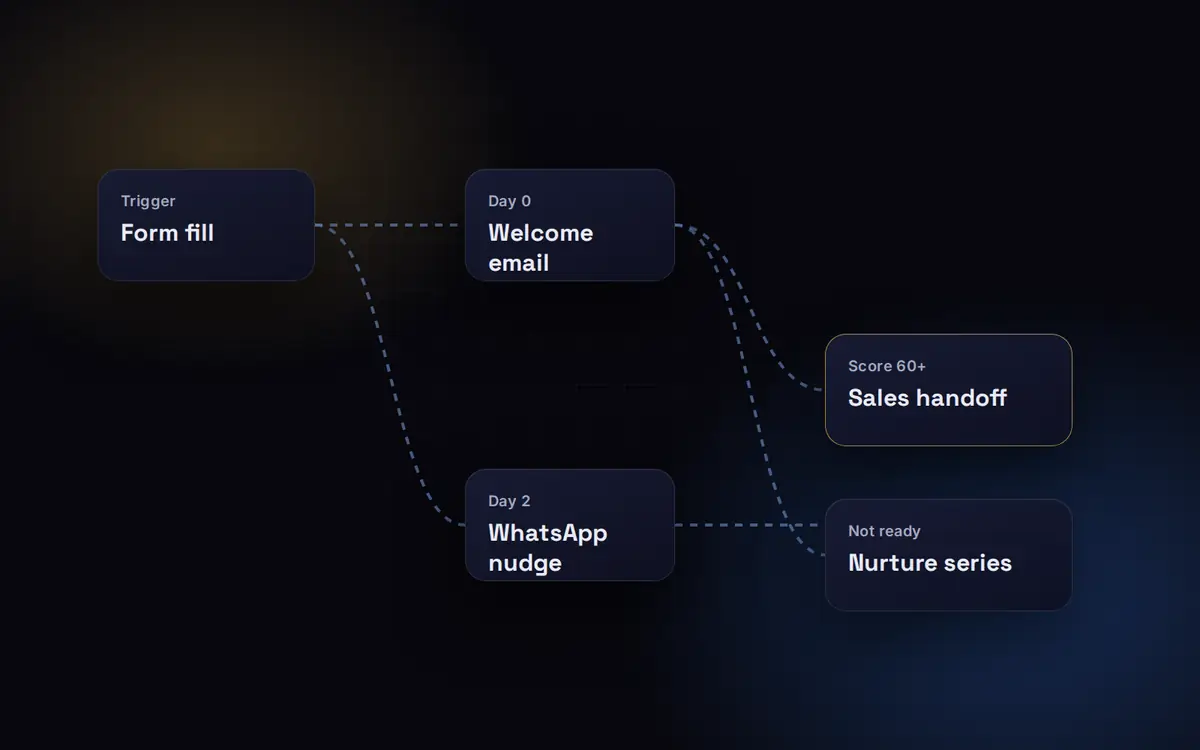
Automation amplifies whatever you set up
Automation is powerful because it runs without attention. That is also its risk. A badly set-up journey sends the wrong message to thousands of people until someone notices. Most of the mistakes we see are simple and fixable.
The most common mistakes
- Scheduled blasts instead of triggers: sending on a calendar rather than when behaviour suggests a message is useful
- No sunset policy: continuing to email people who have not engaged in a year, which hurts deliverability
- Measuring on opens: Apple's Mail Privacy Protection preloads emails and inflates opens (Litmus on Apple Mail Privacy Protection)
- Ignoring authentication: Gmail and Yahoo require SPF, DKIM and DMARC for bulk senders and complaint rates under 0.3% (Resend on Gmail and Yahoo sender rules)
- Weak consent records: risky everywhere, and more so in the UK, where the Data (Use and Access) Act 2025 raises maximum PECR fines to £17.5 million or 4% of turnover once in force (Macfarlanes on the Data (Use and Access) Act 2025)
- Too many channels at once: email, SMS, WhatsApp and push all firing for the same event
- Set and forget: journeys built two years ago still promoting products that no longer exist
Give every journey an owner and a review date. If nobody owns it, nobody notices when it breaks.
What good looks like
Journeys triggered by behaviour, measured on actions and revenue, reviewed every quarter and coordinated across channels so each customer gets one well-chosen message at a time. Bain's research on retention, which found a 5% increase can raise profits by 25% to 95% (Harvard Business Review, 2014), is the reason it is worth doing properly.
What to do this week
List every live automated journey, who owns it and when it was last reviewed. Pause anything nobody can explain. See marketing automation and building a self-running customer journey.