
Go-to-Market Strategy: A Practical Framework
A working go-to-market plan sequences owned, earned and paid channels rather than launching all at once. Owned channels (email, site) typically go first, building the base earned coverage and paid spend then amplify, over a 4-6 week pre-launch and 4-8 week post-launch window.
The sequencing that works
- Owned: email list, existing site traffic, warmed up before launch
- Earned: press, organic social, word of mouth, amplifying the owned base
- Paid: ad spend layered in once organic momentum confirms message-market fit
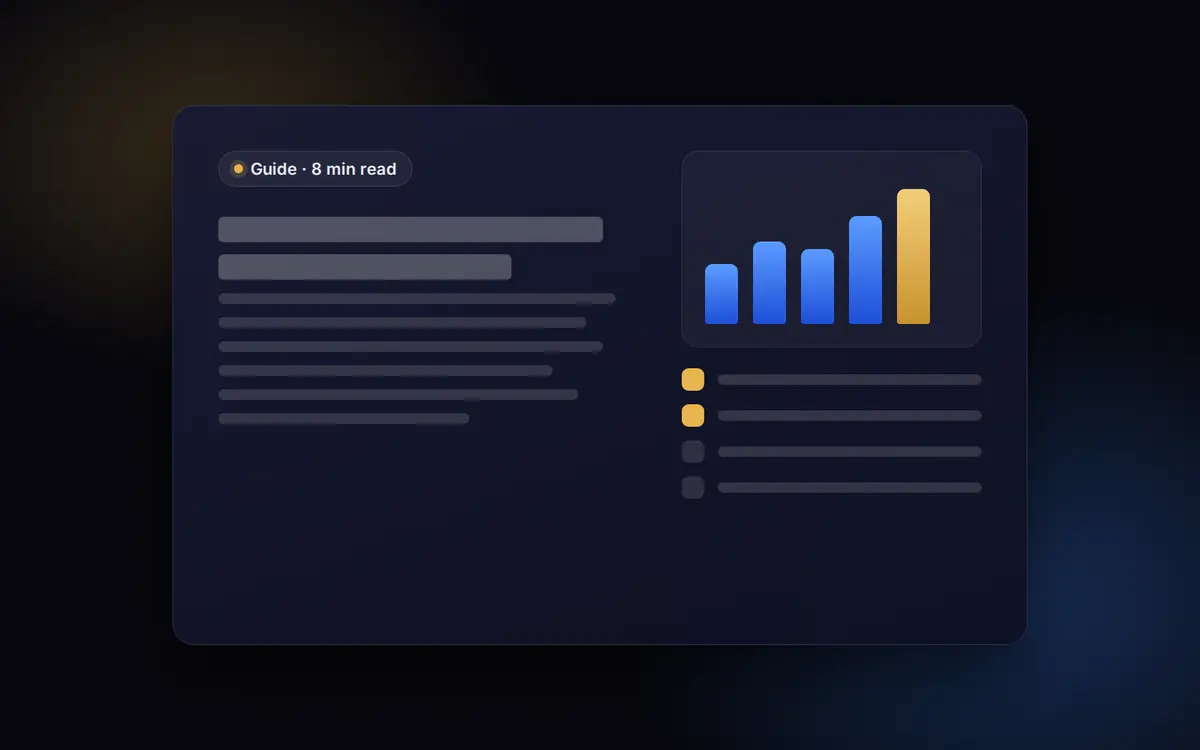
Sequence beats volume
A go-to-market plan works when channels are used in the right order. Owned channels, such as your email list, website and existing customers, come first because they are cheapest and give quick feedback. Earned channels, such as press, creators and word of mouth, amplify early proof. Paid channels scale what is already working.
What has changed for go-to-market
- Buyers self-serve: Gartner found 67% of B2B buyers prefer a rep-free buying experience and 45% used AI in a recent purchase (Gartner, March 2026)
- AI assistants shape shortlists: ChatGPT reported 900 million weekly active users in February 2026 (TechCrunch, Feb 2026); consistent, clear public information about your product helps those tools describe it correctly
- Measurement is harder: after Apple's tracking changes, Meta estimated a $10 billion revenue impact in 2022 (CNBC, Feb 2022), so launch measurement needs your own data
The framework
| Stage | Question | Output |
|---|---|---|
| Market | Who has the problem most acutely? | Target customer profile |
| Positioning | What do they use now, and why is this better? | One-sentence positioning, proof points |
| Pricing | What will they pay, and how will they buy? | Pricing and packaging |
| Channels | Where do they learn and decide? | Channel sequence and budget |
| Enablement | What do sales and support need? | Scripts, FAQs, demos |
| Measures | What does success look like at 30, 90 and 180 days? | Targets agreed in advance |
Agree the measures before launch. If you decide what success means afterwards, every launch looks like a success and nothing is learned.
What to do this week
Draft the six outputs above on one page each. Gaps will be obvious, and they are much cheaper to fix now than after launch. See product marketing and positioning against competitors.