
Reducing SaaS Churn With Retention Marketing
Usage-based retention messaging catches at-risk accounts before they cancel, triggered by declining product usage rather than reacting after a cancellation request. A healthy monthly churn rate runs under 5% for SMB SaaS and under 1% for enterprise; usage-triggered nudges are the single highest-use lever to get there.
What a retention program includes
- Usage decline triggers, catching disengagement before it becomes a cancellation
- In-app and email nudges tied to specific features the account isn't using yet
- Exit-survey data feeding back into product and onboarding improvements
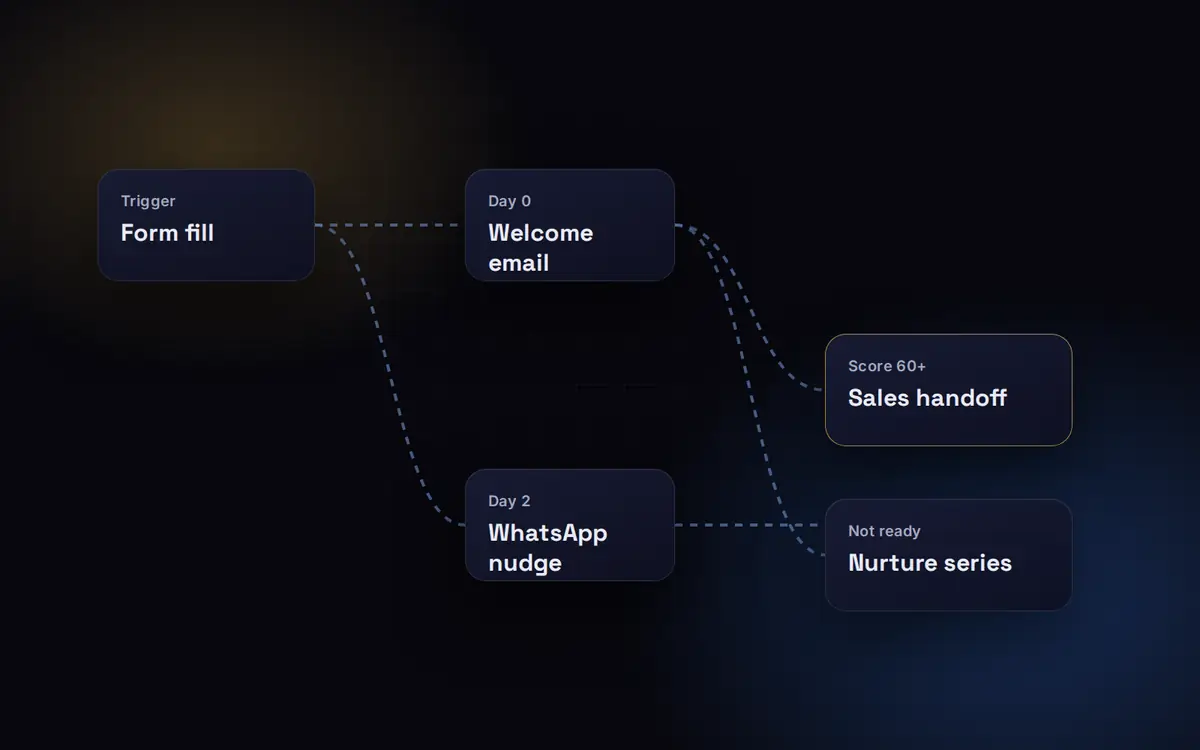
Churn is decided before the cancellation
By the time a customer clicks cancel, the decision was made weeks earlier, usually when they stopped getting value. Retention marketing works by spotting that drift early, from falling usage, missed milestones or support tickets, and responding before the customer starts looking elsewhere.
Why retention deserves marketing budget
Bain's research, summarised in Harvard Business Review, found a 5% increase in retention can raise profits by 25% to 95%, and acquiring a customer can cost five to 25 times more than keeping one (Harvard Business Review, 2014). Duolingo's product team found that improving retention of current users had five times the impact on growth of any other lever it modelled (Lenny's Newsletter, Jorge Mazal). For subscription businesses, churn quietly undoes acquisition.
A retention programme
- Onboarding: get new accounts to their first valuable result quickly
- Usage triggers: messages when key features go unused or activity drops
- Health scores: a simple score combining usage, support and payment signals
- Success check-ins: for high-value accounts, a human conversation before renewal
- Cancellation flow: ask why, offer a pause or downgrade, record the reason
- Win-back: a relevant offer after a sensible interval
Measure opens carefully. Apple's Mail Privacy Protection inflates email opens (Litmus on Apple Mail Privacy Protection), so judge retention emails on product actions, not opens.
What to do this week
Pull the list of customers who cancelled last quarter and look at their usage in the 60 days before. You will usually find a clear pattern, such as a feature never adopted or usage falling after a team change. That pattern is your first trigger. See lifecycle marketing and SaaS marketing.