LLM visibility tracking is the regular measurement of how often and how favourably AI assistants and AI search features mention, cite and recommend your brand for a fixed set of buyer questions, compared with competitors over time. It suits brands that already invest in SEO, GEO or PR and need to report on AI search. You get a monthly report on mentions, citations, descriptions and share of voice, linked to traffic and leads where the data allows.
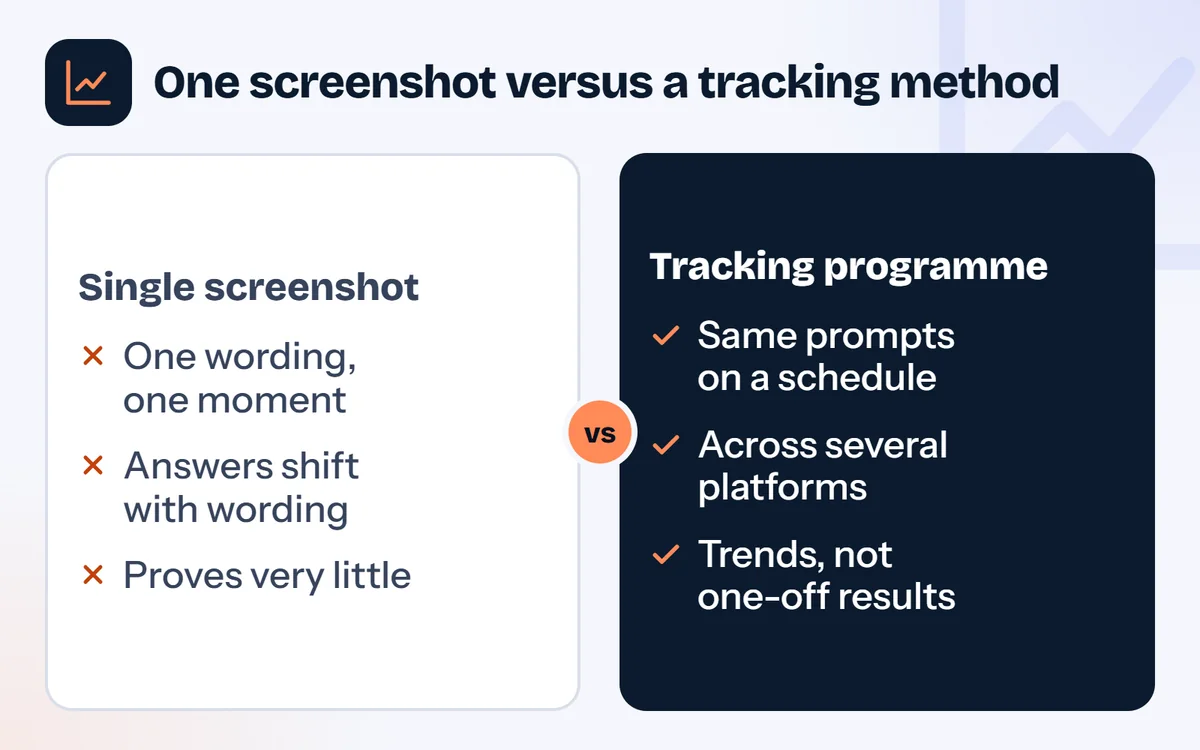
Why one screenshot of ChatGPT proves very little
AI answers change with wording, location, user history and time. Ask the same question twice and you can get a different list of brands. A screenshot of ChatGPT naming you is a pleasant moment, but it cannot tell you whether you are gaining or losing ground.
Useful tracking runs the same set of questions on a fixed schedule, across several platforms, and looks at the trend rather than any single answer. That is what turns AI search from a mystery into a channel you can manage and report on.
This is ongoing measurement. If you only want a one-off picture of where you stand today, the free AI visibility audit is the better place to start.
What LLM visibility tracking measures
- Mention rate: how often your brand is named for each tracked question, on each platform
- Citations: which of your pages are linked as sources, and which competitor or third-party pages are cited instead
- Description: what the answers say about you, whether the facts are right, and whether the tone is favourable, neutral or negative
- Share of voice: your mentions against the competitors you name, over time
- Sources: the sites AI relies on in your category, so content and outreach effort goes where answers actually come from
We cover ChatGPT, Google AI Overviews and AI Mode, Gemini, Perplexity, Claude and Microsoft Copilot, and weight the reporting towards the platforms your buyers use.
Building a question set worth tracking
The questions matter more than the tool. We start from your ten most valuable buyer questions, agreed with you and, where possible, your sales team, then add longer variations around each: comparisons, versions for a particular type of business and the questions asked just before a choice.
The core set stays fixed so one month can be compared with the next, and new questions are added alongside it rather than replacing it. Our guide to tracking brand visibility in AI search explains the method in more depth.
Linking AI visibility to leads and revenue
Mentions matter only if they lead somewhere. Wherever the data allows, we connect visibility to outcomes: referral traffic from AI platforms in your analytics, trends in searches for your brand name, and a "how did you hear about us" question on your forms that lists AI assistants as an option.
AI visibility then sits in the same plain monthly report as everything else: leads and revenue first, with rankings, traffic, calls and AI share of voice as context.
Who tracking suits, and who it does not
It suits brands already doing SEO, GEO or PR work that need to show whether it is changing AI answers, and teams asked to report AI visibility to leadership. It also suits categories such as SaaS, fintech and education, where buyers compare suppliers in AI tools before they enquire.
If the basics are not fixed yet, tracking alone will only measure a problem. The better start then is AI SEO services or GEO services, with tracking running alongside the work.
How tracking starts and runs
We begin with the free AI visibility audit as your baseline. From it we agree the question set, the competitors and the platforms, and you get a 90-day plan with a fixed monthly price.
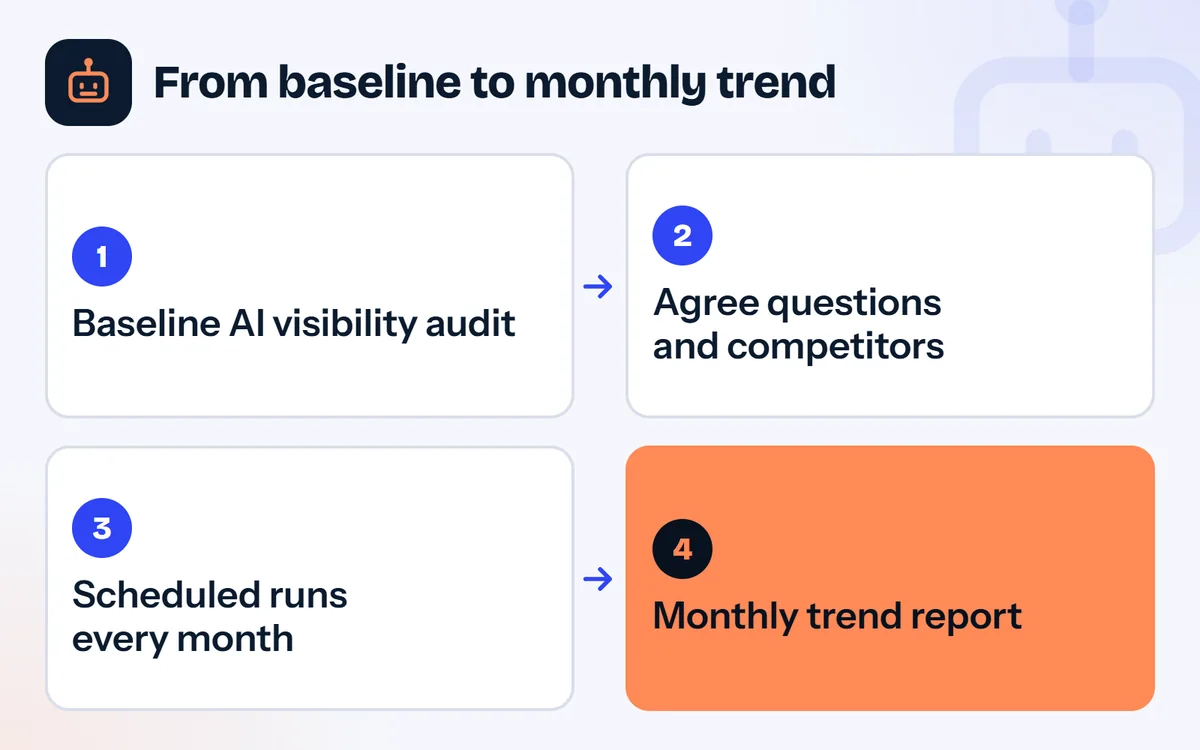
A named senior specialist then runs the questions on the same schedule each month and reviews the answers, the cited sources and how you are described. Each monthly report shows the trend, what changed and which work it relates to.
What we would look at first
We have not published a case study on AI visibility tracking, and we will not borrow one from other work. What we would look at first is your baseline: your share of voice for the agreed questions, the sources cited in your category and any wrong facts about you. Every later month is measured against that starting line.
Working with us from India and from abroad
From India, we share each report and talk it through over WhatsApp and calls in IST, with the team based at our office in Mansa, Punjab.
From abroad, we review each report with you in a slot inside your business hours, contracts roll monthly with no long lock-in, and your data and reports stay in your name. Our fees are often 30 to 60% lower than a comparable local agency in markets such as the US and Canada, because overheads in India are lower. Because answers change with location, we track the questions as they are asked in your market.