
Why Most Apps Lose 80% of Users in the First Week
Most user drop-off happens because onboarding delays the "aha moment", the point a user first experiences the app's core value. Apps that get users there fast, in one or two screens, retain significantly better than apps that front-load account setup and permissions requests.
Where retention leaks happen
- Account creation required before showing any value
- Permission requests (notifications, camera) asked before context is established
- No push or re-engagement trigger tied to actual usage patterns
- Core feature buried several taps deep instead of front and centre
Fixing it without a rebuild
Retention fixes are usually onboarding-flow changes, not full rebuilds: deferring account creation, moving the core feature earlier, and triggering notifications from real usage data rather than a fixed schedule.
The first week decides almost everything
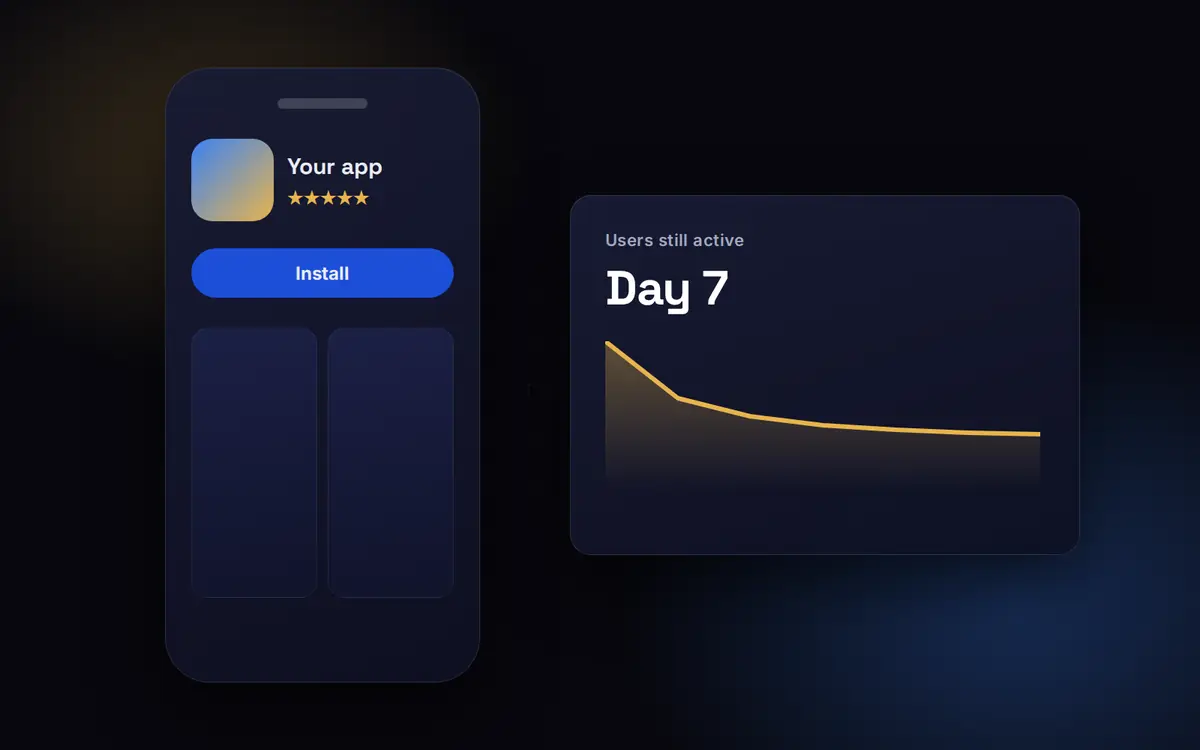
App retention curves are steep at the start and flat later. Adjust's global benchmarks show retention falling to 26% after one day, 13% after seven and 7% after 30 (Adjust retention guide). In other words, most of the users an app will lose are lost in the first week. Improving that week is usually worth more than any acquisition campaign.
Why users leave
- Slow path to value: long sign-ups, permission requests and tutorials before anything useful happens
- Mismatch with the listing: the store page promised something the first screens do not deliver
- No reason to return: nothing prompts the second and third visit
- Noisy notifications: generic pushes train users to ignore or disable them
What the best apps do
Duolingo is the best-documented example. Its former product lead has written that improving retention of current users had five times the impact on daily active users of any other lever, and that features like streaks and leaderboards helped grow daily active users 4.5x over four years (Lenny's Newsletter, Jorge Mazal). The lesson is not to copy streaks. It is to find the behaviour that predicts long-term use and design the first week around it.
For PW.live, replacing scheduled messages with nudges tied to course progress contributed to a 41% improvement in 30-day retention.
What to do this week
Look at your funnel from install to your key action. Find the single biggest drop between screens. Remove one step, delay one permission request or show value one screen earlier, then measure day-seven retention for the next cohort. See app development and why installs without retention are a trap.