
Marketing automation at SerpHike coordinates email, SMS and WhatsApp by trigger, signup, purchase, inactivity, rather than one scheduled blast to the whole list. This usage-triggered approach drove PW.live's 41% better 30-day retention.
How SerpHike runs automation properly
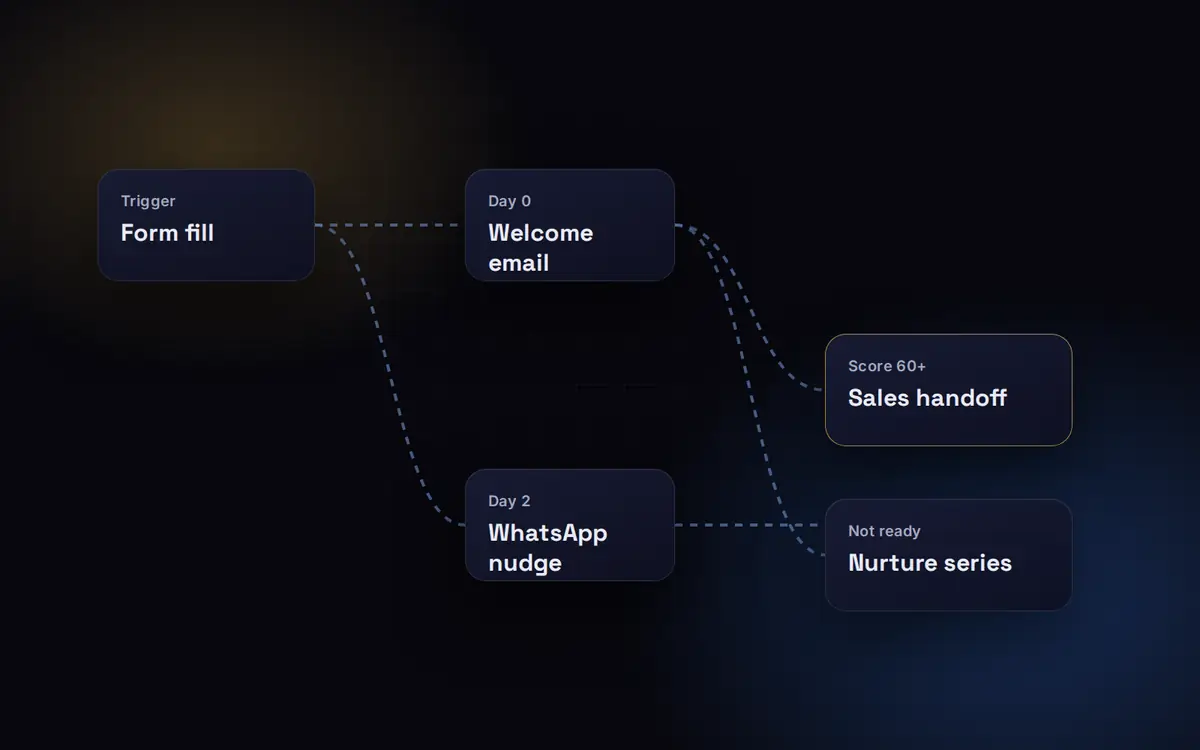
What's included?
- Trigger-based flows across email, SMS and WhatsApp in one sequence
- Inactivity and win-back campaigns tied to real usage data
- Platform setup and integration with existing CRM/product data
- WhatsApp Business API setup for transactional and nudge messaging
| Trigger | Channel used |
|---|---|
| Signup / new install | Email welcome series |
| Usage drop-off | SMS or WhatsApp nudge |
| Inactivity 14+ days | Win-back sequence across all three channels |
Evidence: automation-driven retention
Right message, right moment, no manual effort
Marketing automation sends messages because of what someone did, not because it is Tuesday. A sign-up, an abandoned cart, a missed lesson, a renewal date, a drop in usage. Each trigger gets a message designed for that moment, on the channel the customer actually uses.
Choosing the channel
| Channel | Best for | Watch out for |
|---|---|---|
| Detail, onboarding, receipts, newsletters | Deliverability rules and inflated open rates | |
| SMS | Time-sensitive reminders and confirmations | Cost per message, consent rules |
| Conversations, reminders and support in markets where it dominates | Template approvals and opt-in requirements | |
| Push | App users, quick nudges | Fatigue if overused |
See email versus SMS versus WhatsApp for a fuller comparison.
The rules that changed
Gmail and Yahoo's sender requirements from February 2024 mean bulk senders need SPF, DKIM, DMARC, one-click unsubscribe and complaint rates under 0.3% (Resend on Gmail and Yahoo sender rules). In the UK, the Data (Use and Access) Act 2025 raises maximum fines for direct marketing breaches under PECR to the higher of £17.5 million or 4% of global turnover once the changes take effect (Macfarlanes on the Data (Use and Access) Act 2025). In India, the DPDP Rules phase in consent requirements from November 2025 (India Briefing on DPDP Rules 2025). We build consent and preference management into every journey.
Retention is where automation earns its keep. Bain's research found a 5% increase in retention can raise profits by 25% to 95% (Harvard Business Review, 2014).
Trigger-based automation contributed to PW.live's 41% better 30-day retention.
How we measure it
Conversion by journey, revenue or actions per message, retention by cohort, and opt-out and complaint rates. Opens are tracked but not trusted, because Apple's Mail Privacy Protection inflates them (Litmus on Apple Mail Privacy Protection). See common automation mistakes.