
Email marketing at SerpHike prioritizes welcome, abandoned-cart and post-purchase flows first, the highest-return sequences for most accounts, measured against revenue per email sent, not open rate.
How SerpHike runs email marketing properly
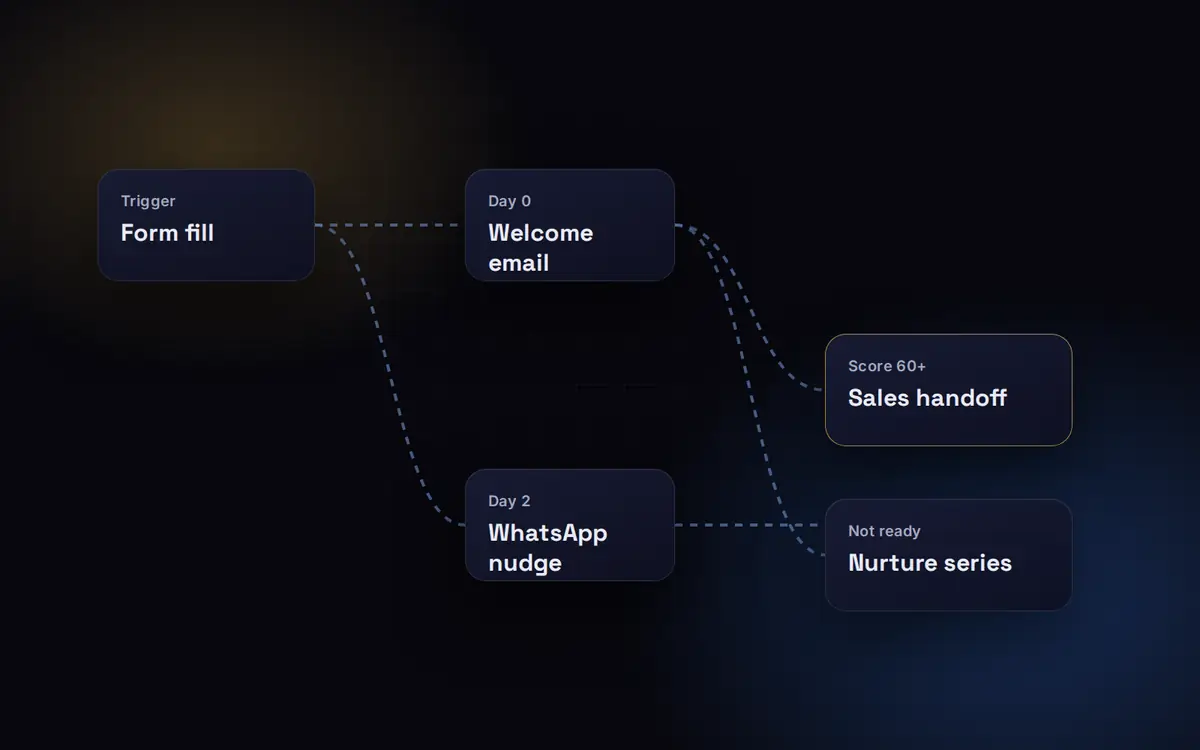
What flows get built first?
- Welcome series, for new subscribers and sign-ups
- Abandoned-cart or abandoned-signup recovery
- Post-purchase or post-enrolment nurture, tied to product/course progress
- Win-back sequences for lapsed customers before they churn fully
| Flow | Trigger |
|---|---|
| Welcome series | New signup or subscription |
| Abandoned-cart | Cart or form left incomplete for 1+ hours |
| Post-purchase nurture | Purchase or enrolment completed |
Evidence: retention driven by automated flows
Most email programmes are one newsletter and a prayer
A monthly newsletter is not an email strategy. The revenue in email comes from automated flows triggered by what people do: signing up, browsing, abandoning a cart, buying, going quiet. Those flows run every day without anyone pressing send, and they usually make more money than every campaign combined.
Deliverability rules tightened in 2024
From February 2024, Gmail and Yahoo required anyone sending around 5,000 or more emails a day to authenticate with SPF, DKIM and DMARC, offer one-click unsubscribe and keep spam complaint rates under 0.3% (Resend on Gmail and Yahoo sender rules). Many brands saw inbox placement drop without realising why. We check authentication, list hygiene and complaint rates before we write a single email.
Why open rates stopped meaning much
Apple's Mail Privacy Protection, launched in September 2021, preloads email content, including tracking pixels, whether or not the person reads the message (Litmus on Apple Mail Privacy Protection). Apple Mail accounted for close to half of all opens at the time, so open rates became inflated and unreliable. We report clicks, conversions and revenue per recipient instead. Our article on why open rates mislead explains the detail.
The flows we build first
- Welcome: introduce the brand, set expectations and make a first offer
- Browse and cart abandonment: timely reminders with the product they looked at
- Post-purchase: order updates, how-to content, review requests and cross-sells
- Replenishment: reminders timed to when customers actually run out
- Win-back: a reason to return for customers who have gone quiet
Checkout abandonment is common and recoverable. Baymard Institute puts the average documented cart abandonment rate at 70.22% (Baymard Institute). A well-timed reminder recovers a share of those orders at almost no cost.
Our automation work contributed to PW.live's 41% better 30-day retention.
How we measure it
Revenue per recipient, flow revenue as a share of total, conversion rate by flow, list growth and complaint and unsubscribe rates. See the three email flows every business needs.