
SEO at SerpHike means ranking pages for searches that convert, not just searches with high volume. A typical engagement runs 6 months, costs $1,000-$3,000 per month depending on competition, and shows first ranking movement at weeks 8-12. The agency has run SEO engagements since 2016 and reports a 212% organic traffic increase for Unacademy as of 2025.
How SerpHike runs SEO properly
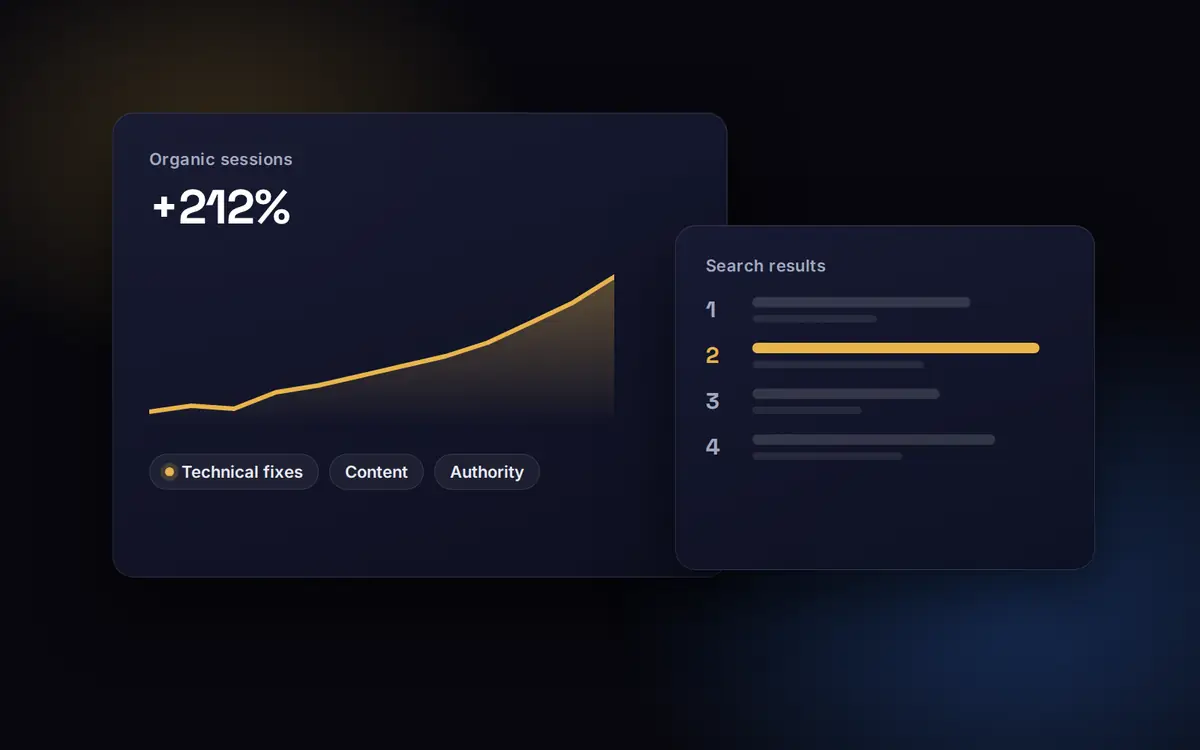
What does SerpHike's SEO service include?
- Engagement starts with a technical crawl and a keyword map tied to buyer intent
- Monthly content calendar built around that keyword map
- Reporting is monthly: organic traffic, keyword rankings, attributed revenue where tracked, not raw impressions
Evidence: SEO results from real SerpHike clients
Figures reflect real engagements, happy to walk you through the full case study.
How much does SEO cost in India?
SEO pricing typically runs $1,000-$3,000 per month, depending on the competitiveness of the industry and city. Healthcare and legal keywords in metro cities sit at the higher end; local-business SEO in tier-2 cities sits at the lower end.
| Tier | Monthly Spend | Typical Fit |
|---|---|---|
| Local | $1,000-$1,500 | Single-city local businesses |
| Growth | $1,500-$2,200 | Multi-city, ecommerce, SaaS |
| Enterprise | $2,200-$3,000+ | National brands, high-competition verticals |
How long until SEO shows results?
| Timeline | What happens |
|---|---|
| Weeks 1-8 | Technical fixes, keyword map, content calendar built |
| Weeks 8-12 | First ranking movement typically appears |
| Month 6+ | Compounding organic traffic gains, why SerpHike scopes a 6-month minimum |
Google's own documentation states most sites should not expect results for four months to a year (Google Search Central SEO Starter Guide).
“As a law firm, we needed specialised marketing. They delivered qualified leads consistently.”
Which industries has SerpHike run SEO for?
SerpHike has run SEO engagements for EdTech (Unacademy, PrepLadder, Utkarsh.com), ecommerce (FlowerAura, Bakingo), and B2B manufacturing exporters (Volza.com). Each industry gets a distinct keyword strategy, see the industries directory for sector-specific approaches.
Rankings are not the goal, revenue is
It is easy to rank for searches nobody buys from. We start with the searches that bring customers: people comparing options, looking for a service in a place, or asking the question that comes just before a purchase. Then we make sure the right page exists, loads quickly, answers the question and leads somewhere.
What has changed in SEO since 2024
- Quality bar: Google's March 2024 core update aimed to cut low-quality, unoriginal content in results by around 40% and introduced spam policies on scaled content, site reputation abuse and expired domains (Search Engine Journal on Google's March 2024 update) (Google Search spam policies)
- AI summaries: Pew found people clicked a regular result in 8% of Google visits that showed an AI summary, against 15% without one (Pew Research Center, July 2025); AI Overviews now reach around 2.5 billion monthly users (Alphabet via The Motley Fool, Aug 2026)
- Evidence wins citations: research presented at KDD 2024 found adding statistics, quotations and sources could lift visibility in AI answers by up to 40% (Aggarwal et al., GEO, KDD 2024)
- Speed still converts: Rakuten 24 saw a 33% higher conversion rate after improving Core Web Vitals (web.dev, Rakuten 24 case study)
How we work
- Technical audit and fixes first, see SEO audit
- Intent map: one page for each important search, no cannibalisation
- Content built on your team's expertise and public evidence
- Authority from relevant publications and genuine partnerships
- Visibility in AI answers tracked alongside rankings, see AEO and GEO
Google says most sites should not expect results for four months to a year (Google SEO Starter Guide). We scope six months minimum and show early movement at weeks 8 to 12.
How we report
Monthly: organic leads or revenue, visibility for priority pages, technical health and what we will do next. See how long SEO takes and SEO versus PPC.