
How to Write Content That Ranks and Converts
Content that ranks and converts opens with a direct answer, uses question-shaped headings, and states facts plainly without hedging. Persuasion belongs in the CTA, not the body, since hedged, vague prose is both a weaker ranking signal and a weaker sales pitch.
The structure that works twice
- Answer block first: 60-120 words directly answering the core question
- Question-shaped H2s matching real search queries, not vague labels
- Specific numbers and named facts, not adjectives like "affordable" or "fast"
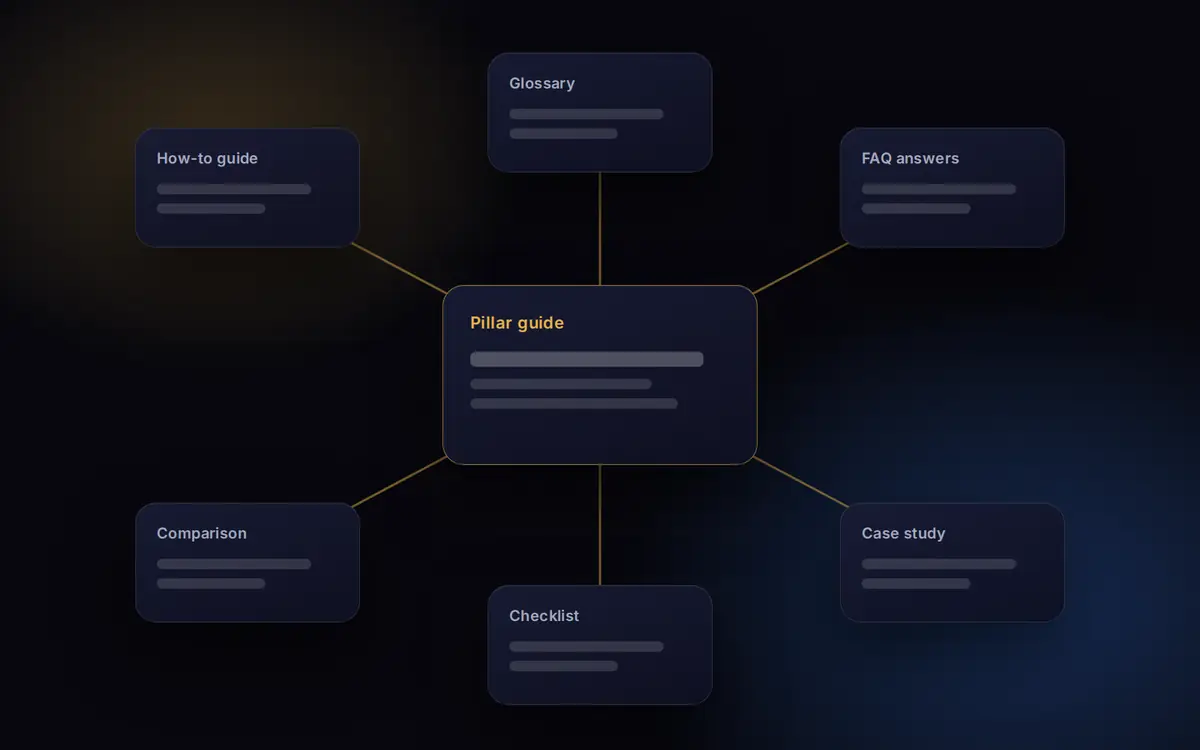
- Internal links connecting to related service and industry pages
Two jobs, one structure
Content has to satisfy two audiences: search engines and AI tools deciding whether to show or cite it, and people deciding whether to trust you. The good news is that the same structure serves both. A clear answer, specific evidence, honest expertise and an obvious next step.
What Google asks for
Google's guidance on helpful content asks who created it, how and why, and whether it shows first-hand expertise (Google Search Central: creating helpful content). Its March 2024 update aimed to cut low-quality, unoriginal content in results by around 40% (Search Engine Journal on Google's March 2024 update). Content that reads like a summary of other summaries is exactly what those changes target.
What helps content get cited
Research presented at KDD 2024 found that adding statistics, quotations and cited sources could lift visibility in generative engine answers by up to 40% (Aggarwal et al., GEO, KDD 2024). That is also what makes content persuasive to people: specific facts, named sources and quotes from someone who knows.
A checklist before you publish
- Does the first paragraph answer the main question directly?
- Are headings phrased as the questions readers actually ask?
- Is every statistic linked to its original source?
- Is there something here from your own experience or data that nobody else has?
- Is the author named, with relevant expertise shown?
- Does the page link to a relevant service, product or next step?
- Would you be happy for a customer to read it aloud to you?
Cut the throat-clearing. Openings like "In today's fast-paced digital world" tell readers and algorithms that nothing specific is coming.
What to do this week
Pick your three highest-traffic articles. Rewrite the first paragraph of each to answer the core question in two sentences, add one sourced statistic and one link to a relevant service. Measure time on page and conversions over the next month. See content writing and answer-first content.