
Content marketing at SerpHike opens every page with a direct answer block and question-shaped headings, the structure documented to earn AI citations, not just search rankings. This system powers Unacademy's 212% organic traffic gain.
How SerpHike writes content properly
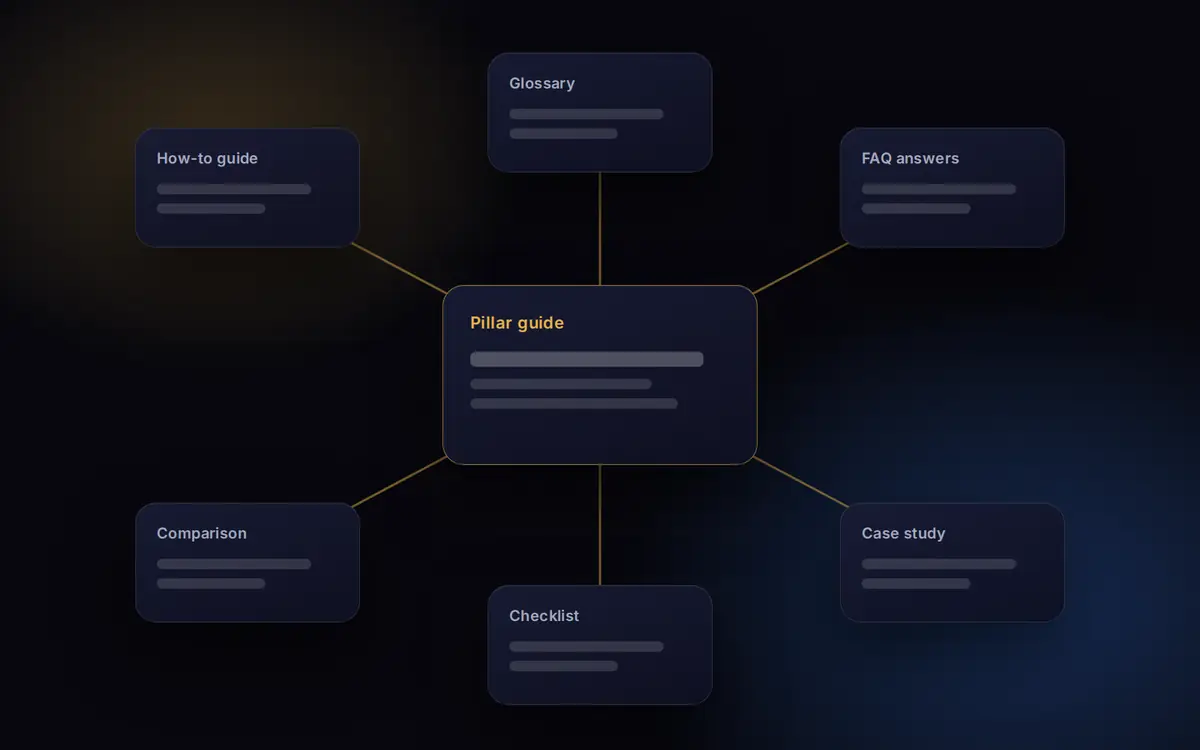
What's included?
- Keyword-mapped content calendar tied to buyer intent
- Answer-first structure: direct answer block, question-shaped H2s, FAQ blocks
- Glossary and guide pages, the highest-yield pages for AI citation
- Internal linking to connect content back to service and industry pages
- Schema markup (FAQPage, Article, DefinedTerm) on every published piece
| Content type | Purpose |
|---|---|
| Service & industry pages | Rank for buying-intent searches, carry proof and CTAs |
| Glossary pages | One-sentence definitions, highest-yield for AI citation |
| Guides | Deeper how-to content for complex buyer questions |
Evidence: content behind real traffic growth
See the glossary for a live example of the answer-first structure this service builds.
Content has to earn its place now
There is more content on the web than anyone can read, and search engines have raised the bar. Google's March 2024 core update aimed to cut low-quality, unoriginal content in results by around 40% (Search Engine Journal on Google's March 2024 update), and its guidance asks who created content, how and why (Google Search Central: creating helpful content). AI summaries have made it harder still: Pew found people clicked a normal result in only 8% of Google visits that showed an AI summary (Pew Research Center, July 2025). The content that still wins is specific, expert and useful enough to be cited.
Our approach
- Start from buyer questions: sales calls, support tickets and search data tell us what people genuinely want to know
- Answer first: the direct answer in the opening sentence, then the detail and evidence
- Add real expertise: interviews with your team, your data and named authors with credentials
- Cite public evidence: statistics and sources linked properly, which research presented at KDD 2024 found can lift AI engine visibility by up to 40% (Aggarwal et al., GEO, KDD 2024)
- Link to money pages: every piece connects to a service, product or next step
Useful content lasts for decades. John Deere has published The Furrow since 1895, and it still reaches more than 550,000 readers in North America because it helps farmers first (The Drum, 2018).
What we produce
Guides, comparison and alternative pages, glossary entries, case studies, reports built on your own data, newsletters and supporting social content. See content writing for writing-only support and our guide to writing content that ranks and converts.
How we measure it
Organic traffic to target pages, rankings for priority questions, citations in AI answers, assisted conversions and enquiries attributed to content.