
How to Build a Customer Journey That Automates Itself
A self-running customer journey maps every meaningful trigger, signup, first purchase, usage milestone, inactivity, win-back, to a specific automated message before a human ever needs to intervene manually. Reviewed quarterly against real conversion data, the map keeps working without daily upkeep.
Mapping the core triggers
- Signup: welcome sequence building initial context
- First purchase/enrolment: post-purchase nurture tied to product progress
- Usage milestone or decline: retention nudges triggered by actual behaviour
- Extended inactivity: win-back sequence before the customer fully churns
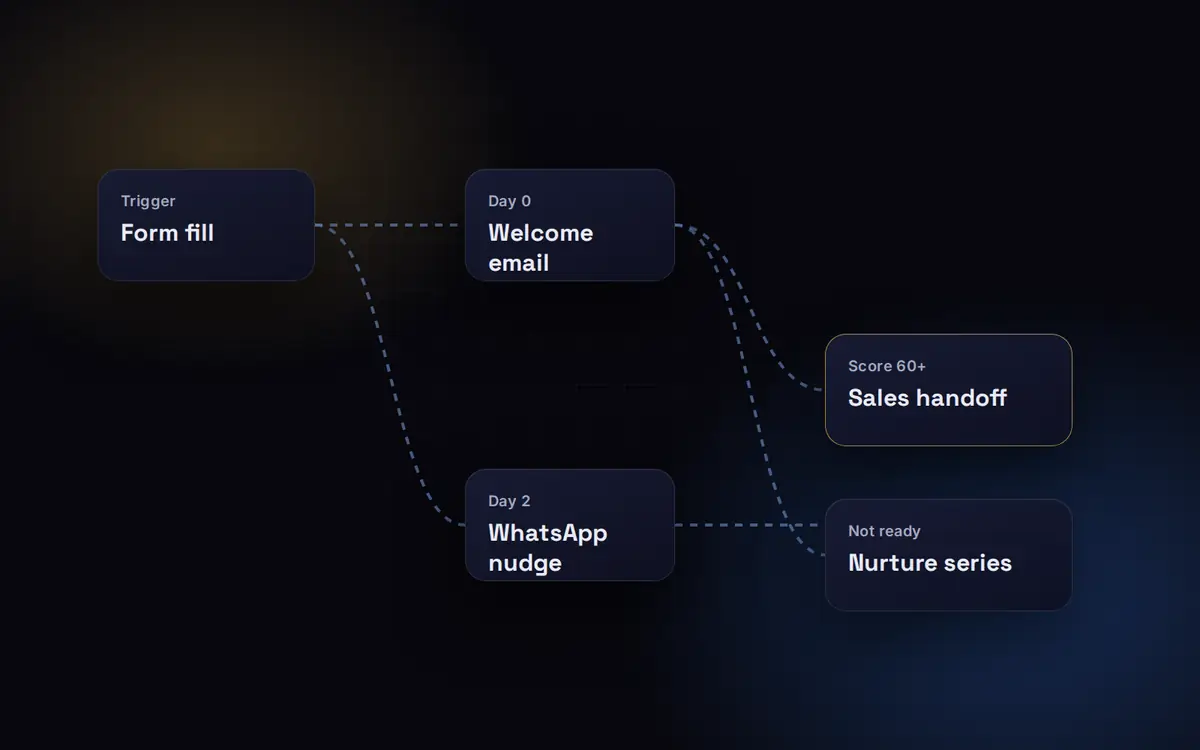
Map the moments, then automate them
A customer journey that runs itself starts with a map, not a tool. List the moments that matter: sign-up, first purchase or first use, key milestones, signs of drifting away, renewal and lapse. For each one, decide what the customer needs to hear, on which channel, and what action you want next.
A core journey map
| Trigger | Message | Goal |
|---|---|---|
| Sign-up | Welcome and first step | First purchase or first use |
| First purchase or use | How to get value, what to expect | Second purchase or habit |
| Milestone reached | Recognition and next step | Deeper use or upgrade |
| Activity drops | Helpful nudge or content | Re-engagement |
| Renewal approaching | Summary of value, clear terms | Renewal |
| Lapsed | Relevant reason to return | Win-back |
Why it is worth the effort
Retention compounds. Bain's research found a 5% increase in retention can lift profits by 25% to 95% (Harvard Business Review, 2014). Duolingo's product team found improving retention of current users had five times the impact on growth of any other lever (Lenny's Newsletter, Jorge Mazal).
Rules that keep it working
- Trigger on behaviour, not dates, wherever possible
- One message per moment, coordinated across channels
- Measure actions and revenue, not opens, which Apple's Mail Privacy Protection inflates (Litmus on Apple Mail Privacy Protection)
- Review each journey quarterly against real results
- Keep consent and preferences up to date in every market you serve
Progress-triggered journeys like these contributed to PW.live's 41% better 30-day retention.
What to do this week
Draw your current journey on a single page, including the gaps where nothing happens. The biggest gap, often between first purchase and second, is where to build first. See marketing automation and lifecycle management.