
PrepLadder: 3.4X Revenue in 9 Months
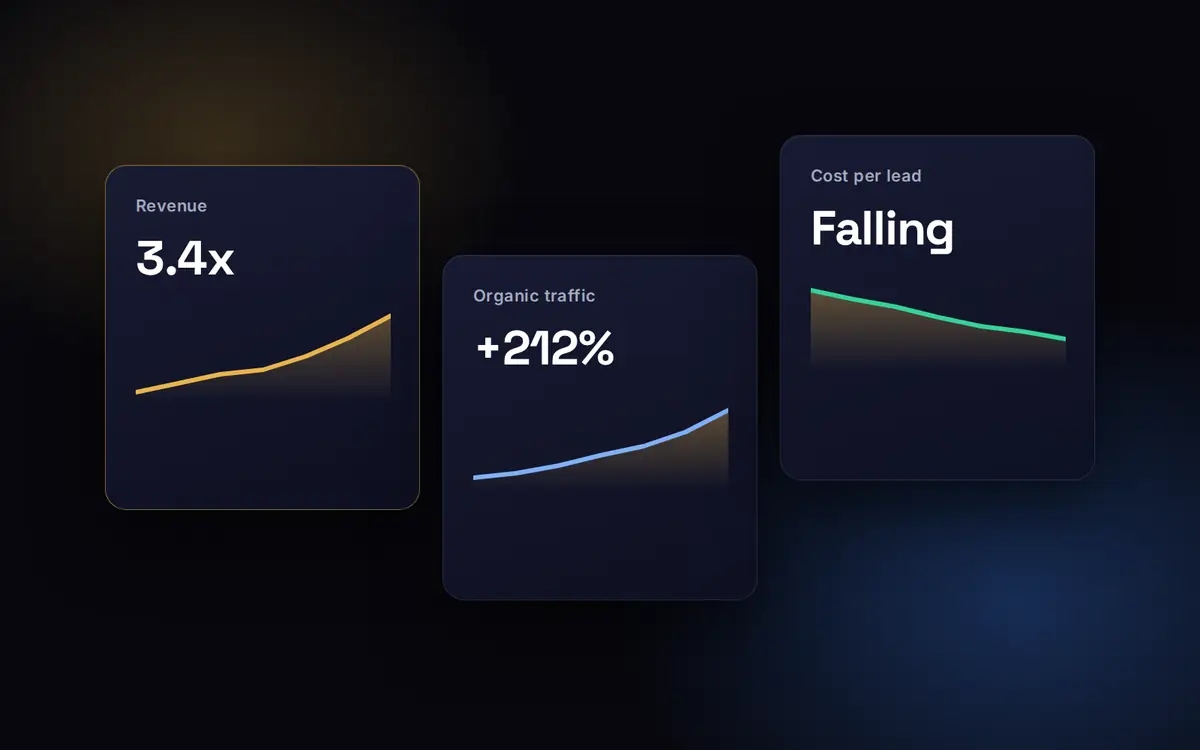
PrepLadder, a medical entrance exam prep platform, grew revenue 3.4X over 9 months in 2025 through a rebuilt organic funnel, not increased ad spend. SerpHike restructured PrepLadder's course-comparison pages, fixed a technical indexing gap that had blocked 30% of course pages from ranking, and rebuilt the enrolment funnel around exam-specific landing pages.
What problem was PrepLadder facing?
PrepLadder's course pages were built on a JavaScript-rendered template that search crawlers indexed inconsistently, leaving roughly 30% of course pages unindexed. Paid acquisition costs were rising while organic traffic stayed flat, and the enrolment funnel routed all traffic through one generic landing page regardless of which exam a visitor was researching.
What did SerpHike change?
| Area | Change |
|---|---|
| Technical SEO | Server-rendered course pages, fixed the 30% indexing gap |
| Content | Exam-specific landing pages replacing one generic funnel |
| Paid media | Reallocated spend from broad match to exam-intent keywords |
What was the result?
Revenue grew 3.4X over the 9-month engagement window in 2025, driven primarily by organic enrolment growth rather than increased ad spend. Figures reflect a real engagement, an exportable report is available on request.
Why an indexing gap is so costly
When roughly 30% of course pages are not indexed, the problem is not just lost rankings. Every piece of content, every internal link and every paid campaign pointing at those pages works harder than it should. JavaScript-rendered templates are a common cause: users see the page, but search and AI crawlers often do not see the content reliably. Pinterest's engineering team found that cutting perceived wait time by 40% lifted SEO traffic and sign-ups by 15% each (Pinterest Engineering), which gives a sense of how much rendering and speed can matter at scale.
The lesson for other education platforms
- Check what crawlers actually see. Test key templates with rendering tools and server logs, not just a browser
- Match pages to exams. A student preparing for one exam will not convert on a generic page built for five
- Move paid spend to intent. Broad-match campaigns hide waste; exam-intent keywords are where enrolments come from
- Measure enrolments. Revenue growth came from paid enrolments, not sign-ups
How this fits the wider evidence
Growth that comes from fixing foundations tends to last. Google's own guidance says most sites should expect SEO results over four months to a year (Google SEO Starter Guide), and this engagement ran for nine. Speed and rendering fixes also help conversion: in the Deloitte and Google study, a 0.1 second mobile improvement lifted lead-generation form completion by 21.6% (Deloitte and Google, Milliseconds Make Millions).
The same audit process now sits at the start of every SEO audit we run, and the approach is described in our EdTech SEO page.