
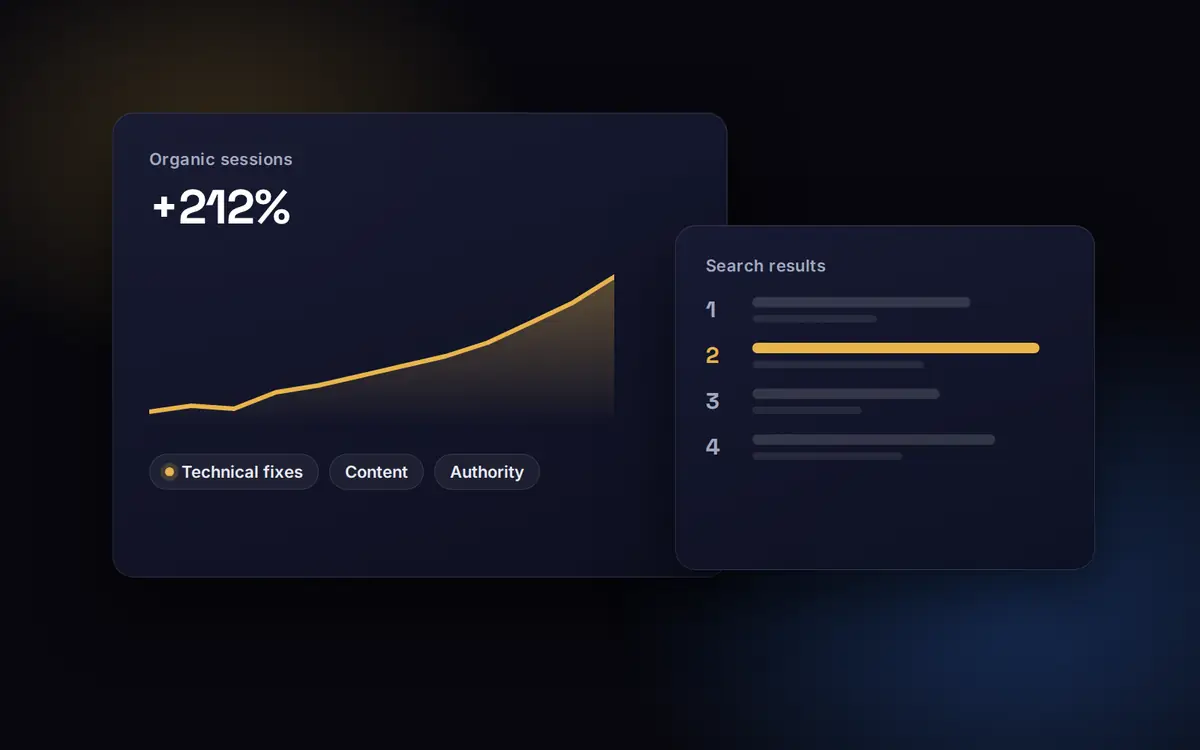
EdTech SEO builds one page per exam or course variant, server-rendered so crawlers can reliably index it, rather than a single generic signup funnel. Unacademy's 212% organic traffic growth came from exactly this: expanding the keyword map into exam- and topic-specific searches with new topic hub pages.
What's different about EdTech SEO?
- Server-rendered, not JS-dependent, so crawlers reliably index course pages
- Exam and course-specific pages, not one generic category page
- Topic hub pages that compound traffic beyond brand-term searches
How students actually search
Students do not search for your brand until late. They search for the exam, the syllabus, the cut-off, the previous year papers and "is this course worth it". Each of those is a separate intent, and each deserves its own page. One generic course landing page cannot rank for all of them, which is why most EdTech sites plateau on brand traffic.
We build the site around exams and courses: a hub per exam, supporting pages for syllabus, pattern, eligibility and preparation strategy, and course pages that link cleanly from each. It is dull architecture work, and it is what drove Unacademy's 212% organic traffic growth.
Why rendering is the first thing we check
Many learning platforms are built as JavaScript apps. That is fine for logged-in users, but search and AI crawlers often see a blank shell. Pinterest's engineering team reported that cutting perceived wait time by 40% lifted SEO traffic by 15% and sign-ups by 15% (Pinterest Engineering). We make sure public exam and course pages are server-rendered or pre-rendered before we write a single word.
AI answers now sit on top of many study questions. Pew found only 1% of visits involved a click on a link inside a Google AI summary (Pew Research Center, July 2025), so being the cited source matters. Clear, factual exam pages with dates, patterns and official links are what get cited.
The work, in order
- Technical audit: rendering, indexing, duplicate exam pages, slow templates
- Exam and topic keyword map, with one page assigned to each intent
- Hub pages per exam, updated every cycle with official dates and changes
- Course pages with honest outcomes, faculty detail and clear pricing
- Internal links from free resources to paid courses, so traffic has somewhere to go
What changes in 2026
International recruitment has become harder for many institutions after the UK stopped most postgraduate taught students bringing dependants from January 2024 (ICEF Monitor) and Canada capped study permits the same year (CIC News, 2024). Domestic test-prep and upskilling demand is where many platforms are now competing hardest, and that makes search visibility for specific exams even more valuable. Pair this with EdTech paid media if you need enrolments sooner.