
EdTech performance marketing runs Google Search for exam-specific intent and Meta/YouTube for awareness among prospective students, measured against paid enrolments rather than free sign-ups, since free-trial-heavy funnels can overstate performance on raw sign-up volume alone.
What's included?
- Google Search campaigns for exam-specific and comparison queries
- Meta and YouTube campaigns for top-of-funnel awareness
- Lead scoring pipeline unifying SEO and paid leads, as run for Utkarsh.com
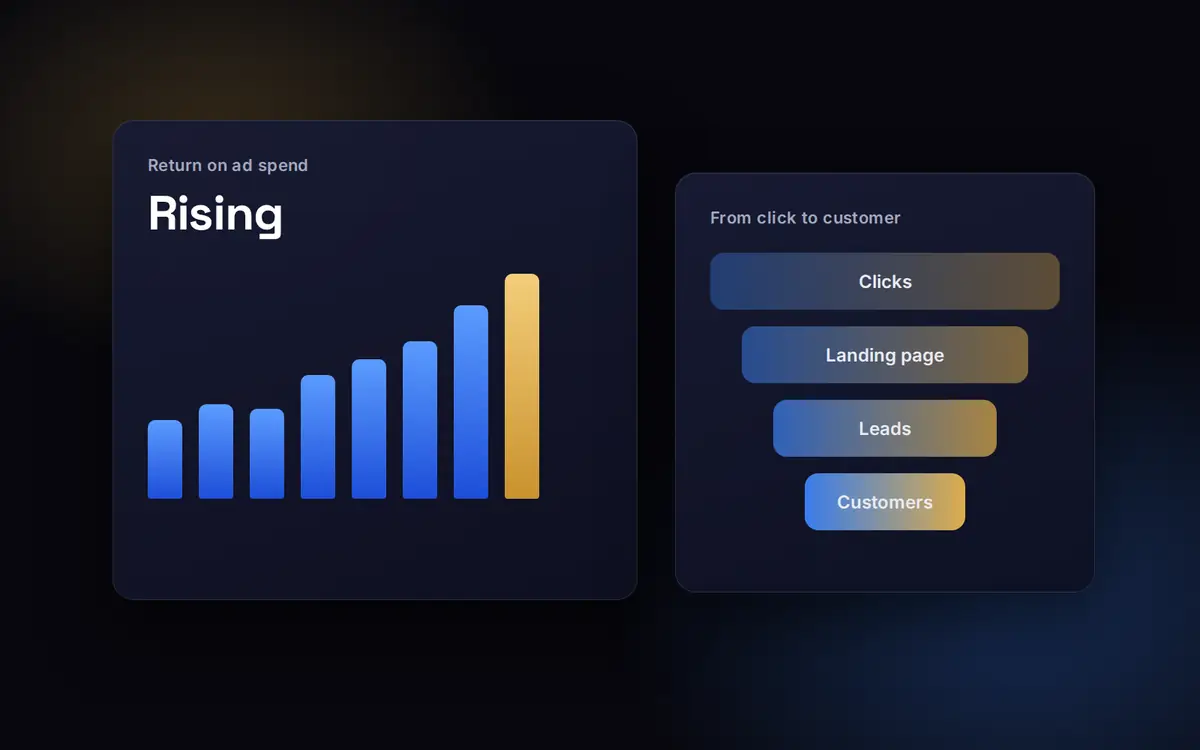
Sign-ups are the wrong target
Free sign-ups are easy to buy and hard to turn into revenue. Most EdTech ad accounts we audit are optimised to a free trial or lead form, so the platforms happily find people who like free things. The dashboard looks healthy and the enrolment numbers do not move.
We move the optimisation target as far down the funnel as your data allows: paid enrolment first, then qualified lead, then sign-up only as a last resort. That usually means a short dip in volume and a clear improvement in cost per enrolment within one or two months.
Why the funnel matters more than the channel
Apps make this sharper. Adjust's benchmarks show average app retention falls to 26% on day one and 7% by day 30 (Adjust retention guide). If your paid campaigns bring in installs that never open a lesson, you are paying twice: once for the install and again to re-engage. Duolingo's product team found that improving retention of current users had around five times the impact on daily active users of any other lever they modelled (Lenny's Newsletter, Jorge Mazal).
Buyers research on their own. Gartner's 2026 survey found 67% of B2B buyers prefer a rep-free experience (Gartner, March 2026). Students and parents behave the same way: they want fees, outcomes and demo lessons visible before they will speak to a counsellor.
What we run
- Google Search for exam-specific, course-comparison and "best coaching for" queries
- YouTube and Meta for demo lessons and awareness among the right age and region
- Lead scoring that ranks enquiries by course, city, exam date and engagement, the model we built for Utkarsh.com's 3,800+ qualified leads a month
- Offline conversion upload from your CRM so platforms learn from enrolments
- Weekly creative testing on demo clips, faculty and results claims that can be backed up
Advertising claims matter here. In India, ASCI rules apply to education advertising, and in the UK the CAP code requires claims about results to be substantiated. We keep evidence for every claim we run. For the organic side, see EdTech SEO.