
Local business paid campaigns lean on Google Local Services Ads, a pay-per-lead format shown above regular results, used to supplement rather than replace GBP and local SEO, which typically outperform paid on cost-per-lead. Reported against cost per call or booking.
What's included?
- Google Local Services Ads setup for service-area businesses
- Targeted Google Search campaigns for high-intent local queries
- Reporting against cost per call or booking, not clicks
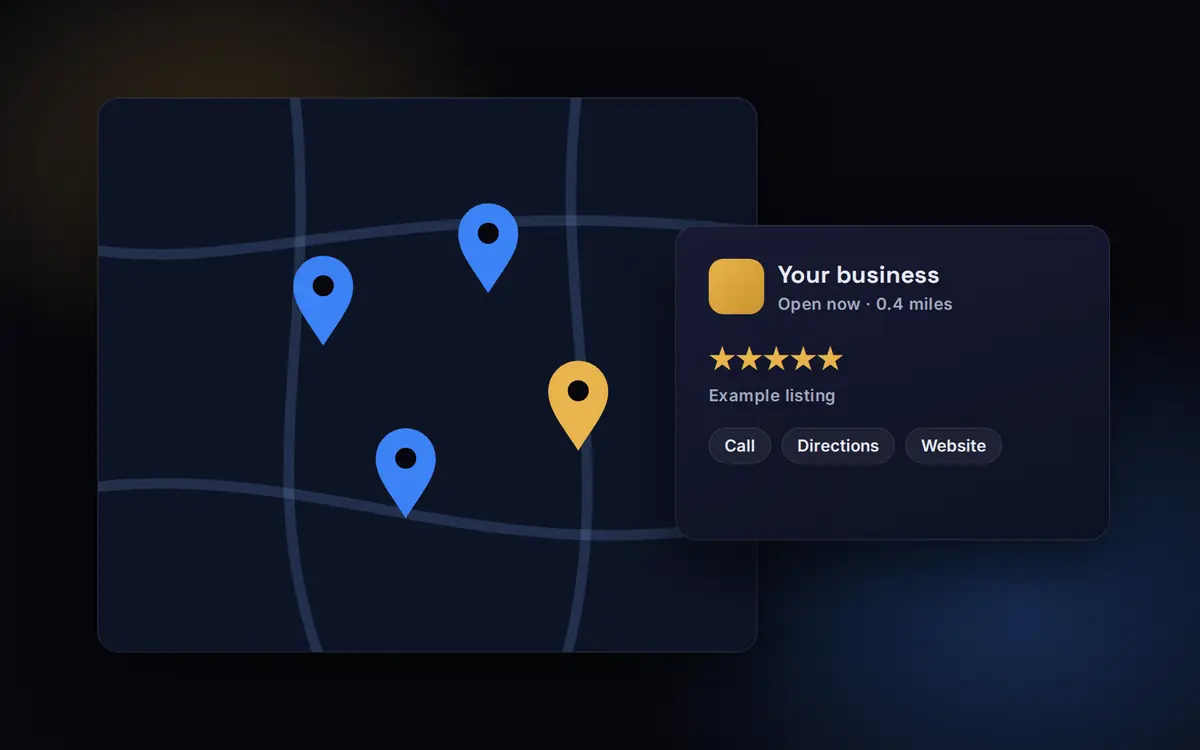
Paid ads should top up local search, not replace it
For most local businesses, a strong Google Business Profile and a few good pages bring the cheapest enquiries. Paid ads fill the gaps: a new area you want to break into, a quiet month, a high-value service you want more of. We set budgets from what a customer is worth to you, then find the cheapest way to get them.
The formats that work locally
- Local Services Ads: pay-per-lead listings above the normal results, with a Google screening badge in eligible categories
- Search campaigns: tightly targeted to your service area, with call extensions and clear pricing
- Meta ads: good for offers, events and services people do not search for, like a new class or a seasonal service
- Retargeting: a gentle reminder for people who visited but did not call
The most common waste we see is a service area that is far too wide. A plumber in one town paying for clicks forty miles away is funding someone else's lead. We set radius and postcode targeting first.
Why speed of response matters
Local customers usually contact two or three businesses and choose whoever replies first. We set up call tracking and instant WhatsApp or SMS replies to forms, so paid leads do not go cold. And we make sure the landing page is quick on mobile: in the Deloitte and Google speed study, a 0.1 second improvement lifted progression from form start to submission by 21.6% on lead-generation sites (Deloitte and Google, Milliseconds Make Millions).
What we report
Calls, bookings and cost per lead by service and area, with call recordings reviewed where you allow it, so you know which campaigns bring real customers. Pair this with local SEO to reduce ad spend over time.