
SaaS SEO builds comparison ("vs.") pages and use-case pages that intercept B2B buyers at the exact moment they're evaluating alternatives, since B2B decisions take months and multiple stakeholders. Claims stay accurate and fairly represented, standard practice, not a compliance risk.
What's different about SaaS SEO?
- Comparison pages targeting named competitors, factually and fairly
- Use-case pages matching how different buyer roles search
- Content built for multi-stakeholder, multi-month research cycles
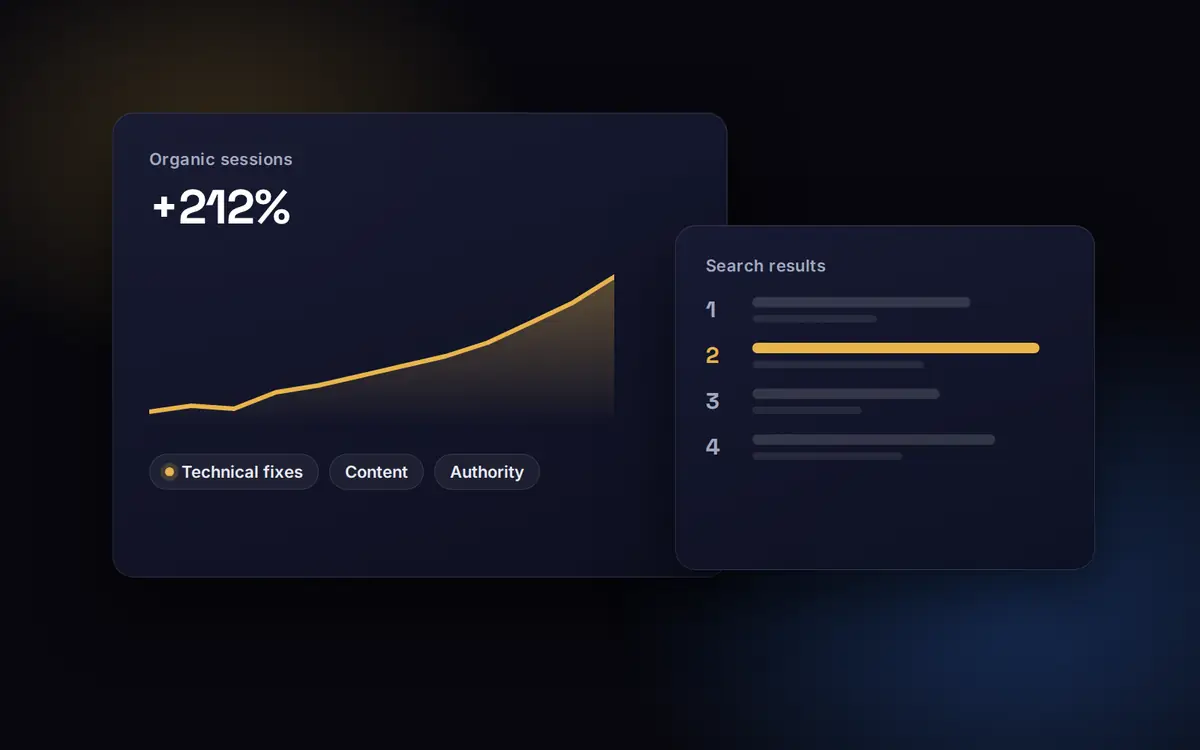
Rank where the decision happens
Top-of-funnel blog traffic is easy to grow and hard to monetise. SaaS buyers who are close to a decision search differently: "[competitor] alternatives", "[your tool] vs [their tool]", "[category] for accountancy firms", "[tool] integration with HubSpot". Those searches have small volumes and very high value. We build for them first.
What the buyer journey looks like now
Gartner's 2026 survey of 646 B2B buyers found 67% prefer a rep-free buying experience, and 45% used AI during a recent purchase (Gartner, March 2026). They build a shortlist on their own, often by asking an AI assistant, then check the vendor's site to confirm. If your comparison pages are vague or missing, a competitor's version of the comparison becomes the one they read.
Zapier is the reference case for integration SEO: tens of thousands of app integration pages, each matching a real search, driving an estimated 16% of its organic traffic according to Ahrefs (Ahrefs, Zapier SEO case study). The pattern works for any product with integrations or templates, provided each page carries unique, useful detail.
The page types we prioritise
- Comparison pages: honest, specific, with a fair account of where the competitor is stronger
- Alternative pages: for buyers leaving a named competitor, with migration detail
- Use-case and industry pages: how the product solves a specific job for a specific team
- Integration pages: what connects, what syncs, and how long set-up takes
- Pricing and security pages: the two pages procurement always checks
Accuracy protects you
Comparison content has legal edges. Claims about competitors must be accurate and verifiable under advertising rules in the UK, US and India. We keep a dated evidence file for every comparison and update it when either product changes. Our guide to SaaS comparison pages goes into more detail.